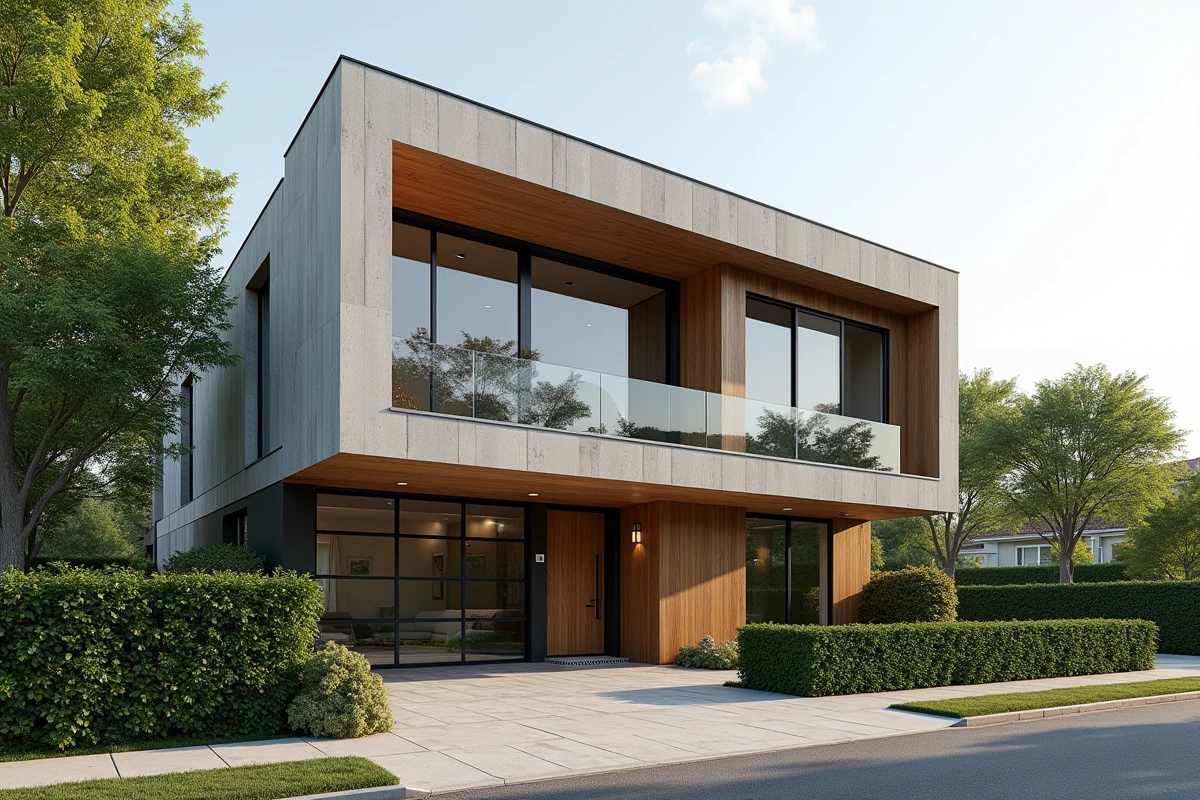
On a renovation project for an old building or new construction, the first question in meetings rarely concerns architectural style. We talk about budget, deadlines, and PLU constraints.
Architecture often takes a back seat, even though it is precisely what determines the perceived value of the property at resale or rental. Current architectural trends are not merely aesthetic whims: they respond to regulatory constraints, usage expectations, and measurable real estate valuation criteria.
Reversibility of buildings: the constraint that changes architectural design
When designing an office building today, the question of changing usage arises from the sketch stage. The Climate and Resilience Law of 2021 has accelerated this movement in France, and the preparatory work for changes to the Construction Code has encouraged the consideration of reversibility in building permits since 2022.
In practical terms, this means more regular structural grids, ceiling heights sufficient to accommodate both residential and tertiary uses, and oversized technical shafts. A building designed for reversibility costs a bit more to construct, but it reassures investors because it limits the risk of obsolescence.
For residential real estate projects, this logic is found on a smaller scale: non-load-bearing partitions, rooms sized without rigid allocation, and access points that allow for splitting or merging units. This architectural approach transforms flexibility into a concrete selling point, not just a marketing promise.
You can discover SIA Architecture online to see how this logic of reversibility applies to different types of projects, from collective housing to converted tertiary spaces.

Low-carbon architecture and European taxonomy: what weighs on asset value
Developers and real estate funds no longer talk about energy performance as a bonus. The European taxonomy, clarified by the Commission in 2023-2024, imposes strict thresholds for a construction or renovation activity to be considered “sustainable.” Buildings that do not meet these criteria risk losing attractiveness to institutional investors subject to the CSRD directive.
For an architect, this translates into very concrete design choices:
- Favoring bio-sourced or geo-sourced materials (wood, rammed earth, hemp) whose carbon footprint over the life cycle is documented and verifiable
- Designing the building envelope to achieve energy performance levels compatible with the taxonomy thresholds, not just with RE2020
- Integrating material circularity from the design phase, with dismountable rather than glued or sealed assemblies
- Documenting the carbon footprint of the project to feed the non-financial reporting of the project owner
This European regulatory framework changes the game for real estate valuation. A building aligned with the green taxonomy is easier to finance and attracts tenants willing to pay a higher rent, because they also find an advantage for their own ESG reporting.
Materials and local supply chains: an underestimated architectural lever
The choice of material is not just a matter of carbon footprint. On the ground, it is observed that projects that mobilize local supply chains (regional quarry stone, wood from nearby managed forests) benefit from a territorial anchorage that appeals to communities and buyers. Feedback varies on this point depending on the markets, but in areas where land is tight, this “short circuit” dimension becomes a true differentiator.
Bioclimatic design and natural light: the direct impact on price per square meter
This is confirmed in every operation: a cross-ventilated apartment, oriented to capture natural light without summer overheating, sells better than a poorly oriented unit in the same development. Bioclimatic design is not a decorative trend, it is a technical parameter that directly affects real estate value.
The principles are known to architects but still too rarely applied in current promotions: solar caps sized according to the sun’s path, cross-ventilation, thermal inertia of heavy materials on the south facade. These devices reduce dependence on active heating and cooling systems, which lowers costs and enhances the attractiveness of the property.
Outdoor spaces and livable extensions
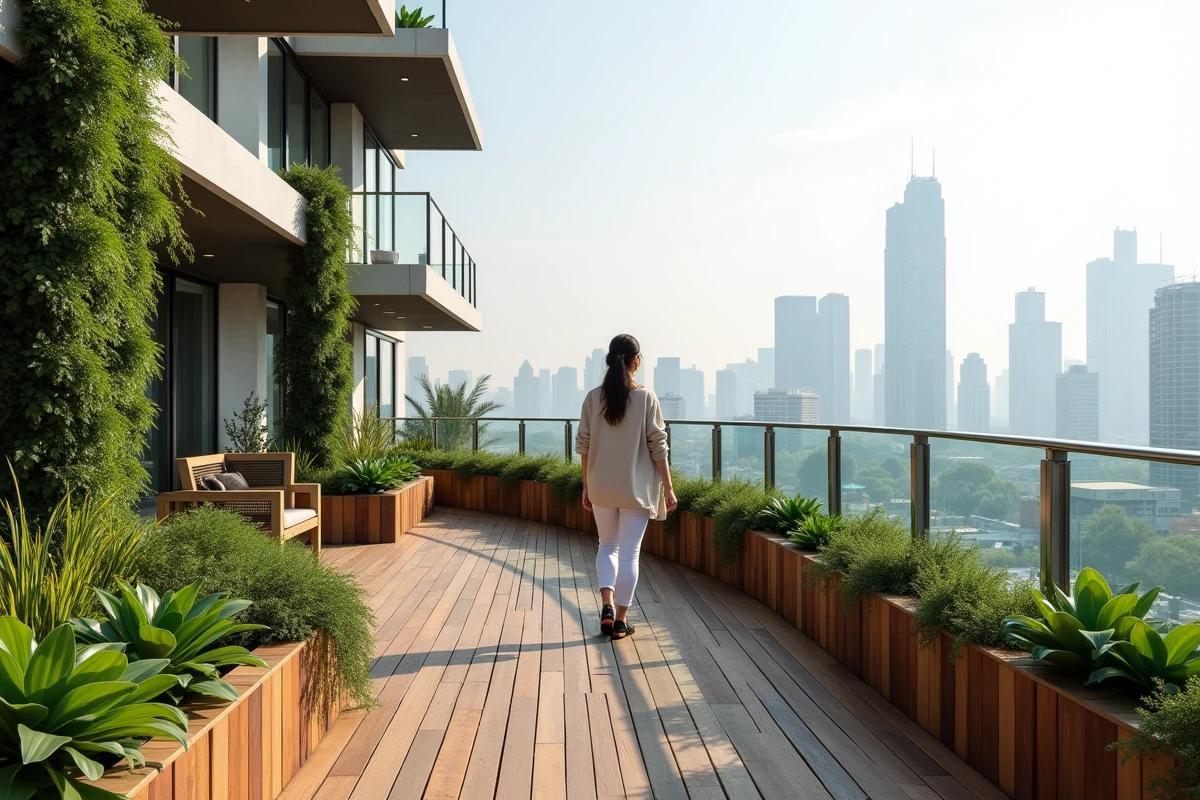
Balconies, loggias, and terraces are no longer just comfort options. Since the post-Covid period, private outdoor space has become a priority purchase criterion for the majority of buyers in collective housing. Architects who integrate these extensions from the building’s volumetry, rather than as cosmetic additions, achieve more coherent facades and truly usable spaces.
The minimum depth for a balcony to be functional is around one and a half meters. Below that, you can store a bike and a planter. Above that, you can set up a table, and the property gains significant perceived value.
Interior architecture and modularity: what buyers really expect
Individual clients buying off-plan are increasingly asking a specific question: can we modify the interior layout without touching the structure? The answer directly depends on the initial architectural design.
The most valuable projects include removable or repositionable partitions, technical blocks (kitchen, bathroom) grouped around a central core, and accessible networks without demolition. This type of modular interior design appeals to both first-time buyers, who anticipate changes in their family, and rental investors, who want to adapt the property to different tenant profiles.
Interior architecture also plays a role in finishes and atmospheres. Current trends favor neutral tones, visible raw materials (polished concrete, solid wood, metal), and a limited palette that ages better than trendy effects. A sober and well-designed interior remains attractive on the market for years, while an overly dated layout loses value quickly.

Real estate projects that perform well in the current market share a common trait: their architecture responds to real constraints (regulation, usage, resale) rather than stylistic effects. Reversibility, low carbon, bioclimatic design, and interior modularity are not options to check off in a specifications document. They are the parameters that determine, from the building permit stage, whether a property will appreciate or depreciate in the years following its delivery.