
Anthracite gray is anything but a neutral or fleeting choice: it makes its way onto terraces with a consistency that speaks volumes about its advantages. Outdoor architects recommend it, manufacturers see it climbing in their statistics, and trends, sometimes volatile, struggle to dethrone it. It is often imagined that this dark shade is only suited for contemporary homes or mild regions. Nothing could be further from the truth. Anthracite tiles are installed everywhere, challenging preconceived notions, and its popularity does not wane in the face of classic tones. The decision to install this type of tile is not limited to its durability or appearance. Technical criteria, daily maintenance, and weather variations impose real trade-offs. Some properties, often overlooked, change the game once the terrace is set up.
Outdoor Tiles: Differences to Know and Reasons for the Success of Anthracite
Choosing an outdoor tile is never done lightly. The market is overflowing with options: ceramic stoneware, terracotta, natural stone. One must compare: wear resistance, slip resistance in the rain, freeze resistance. Authenticity lovers sometimes turn to wood imitation or stone effect tiles. But anthracite gray moves forward unapologetically: it imposes a clear modernity without ever falling into monotony. Its deep hue enhances both minimalist terraces and lush gardens. The dark gray highlights furniture, emphasizes foliage, and structures perspectives. How can this success be explained? The anthracite outdoor floor tile stands out first for its versatility. Everyday marks are discreet, stains blend in, and the atmosphere retains an elegance that transcends the years. Practically speaking, this covering avoids overheating under the sun, unlike some very light or overly dark tones. Manufacturers are betting on large rectangular formats: easier to lay, they visually enlarge the space.
Here’s what those who have adopted it remember:
- Adaptability: it pairs well with wood, metal, or stone, without ever clashing.
- Longevity: its color endures through the years without going out of style, even as trends change.
- Ease of maintenance: a rinse with clear water is enough to revive the intensity of the shade.
It is therefore not a passing fad: choosing an anthracite outdoor floor tile is betting on a durable solution that combines aesthetics, practicality, and resistance, without sacrificing style.
Resistance, Maintenance, Aesthetics: Criteria for a Successful Terrace Tile
Resistance remains the primary requirement for terrace tiles. Temperature fluctuations, impacts, and repeated foot traffic put the material to the test. Ceramic stoneware is the favorite, known for its strength and low porosity. It withstands harsh winters and scorching summers without losing its luster or cracking.
On the maintenance side, it’s best to keep things simple. Anthracite tiles are more resistant to stains, moss, and require no special effort to maintain. A low porous surface and fine joints limit the appearance of ingrained dirt.
The following tips make outdoor tile maintenance easier:
- Quick cleaning: a sweep with a broom is enough to restore shine.
- Prevention: applying a water repellent enhances long-term protection.
The choice of format and color also influences the ambiance: a stone imitation tile or concrete structures the space, while a wood effect adds a warm touch. Anthracite gray, with its understated elegance, highlights the lines of the terrace, creates a striking contrast with the vegetation, and harmonizes perfectly with contemporary furniture.
In summary, the ideal is to choose outdoor tiles that align with your lifestyle, the environment, and the desired effect. The right compromise: robustness, easy maintenance, and a strong visual character. Nothing approximate, everything in coherence.
Practical Tips for Installing, Maintaining, and Ensuring the Durability of Anthracite Flooring
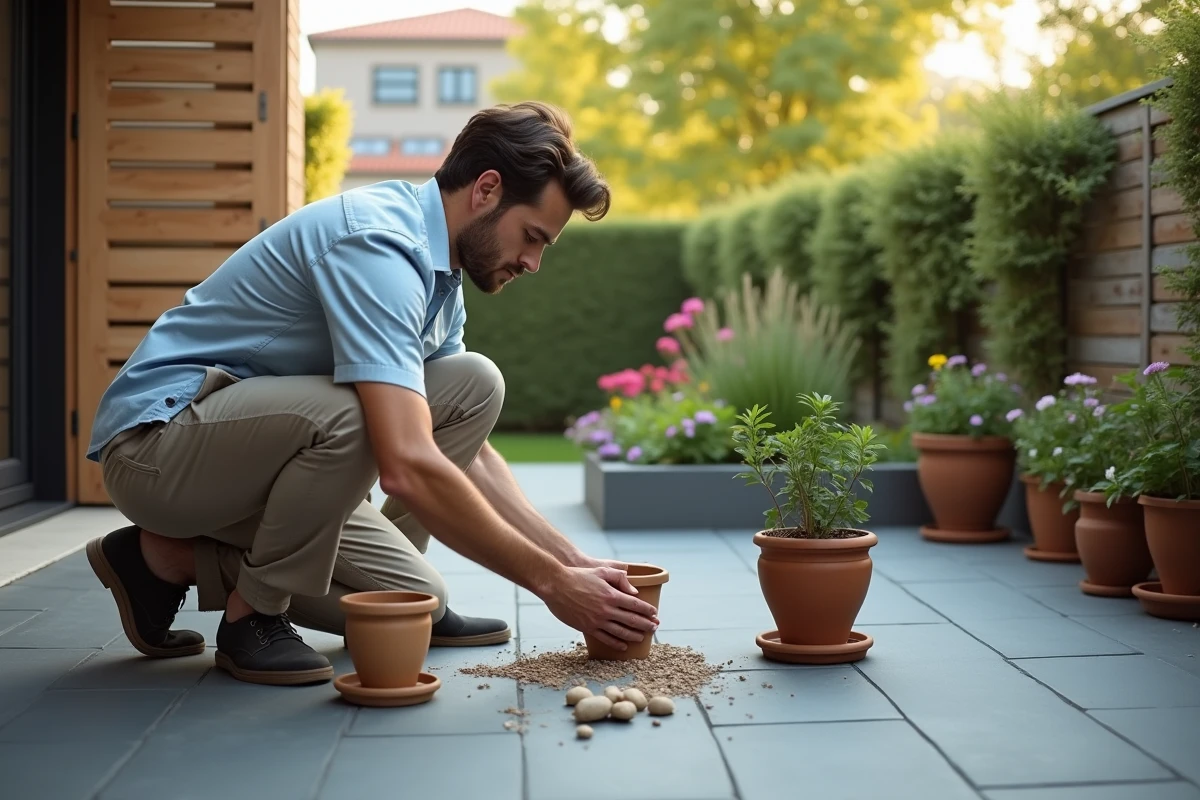
Installing an anthracite outdoor floor tile requires rigor and foresight. The substrate must be well-prepared, perfectly leveled, and stable to ensure the longevity of the covering. An appropriate mortar bed, a slight slope for water drainage, precise joints: every step matters. Spacers help maintain alignment. In high-traffic areas, it’s better to choose a thick, slip-resistant ceramic stoneware: safety and durability are guaranteed.
To successfully carry out the installation, keep the following points in mind:
- Check the compatibility of adhesives and joints for outdoor use.
- Allow to dry completely before enjoying the terrace.
The maintenance of anthracite tiles is easily managed on a daily basis. Regular sweeping, cleaning with warm water, and, if necessary, a neutral detergent are enough to maintain its shine. The dark shade naturally masks marks. An annual water-repellent treatment protects against moisture and organic stains.
To preserve your tiles over time, regularly monitor the condition of the joints and act as soon as a crack appears. Placing outdoor mats under furniture prevents scratches. Choosing suitable accessories and furniture completes the ensemble, creating a harmonious, welcoming terrace built to last.
Ultimately, anthracite tiles do not just resist: they transform the terrace into a space where comfort meets character, and where each season offers it a new light.