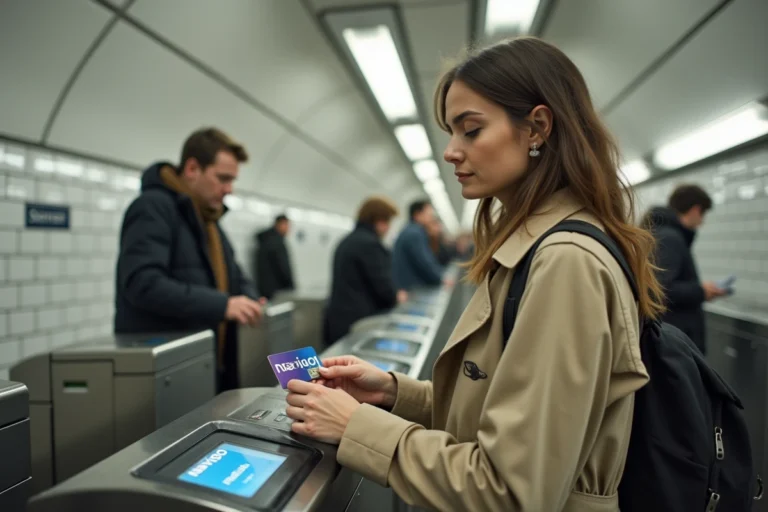
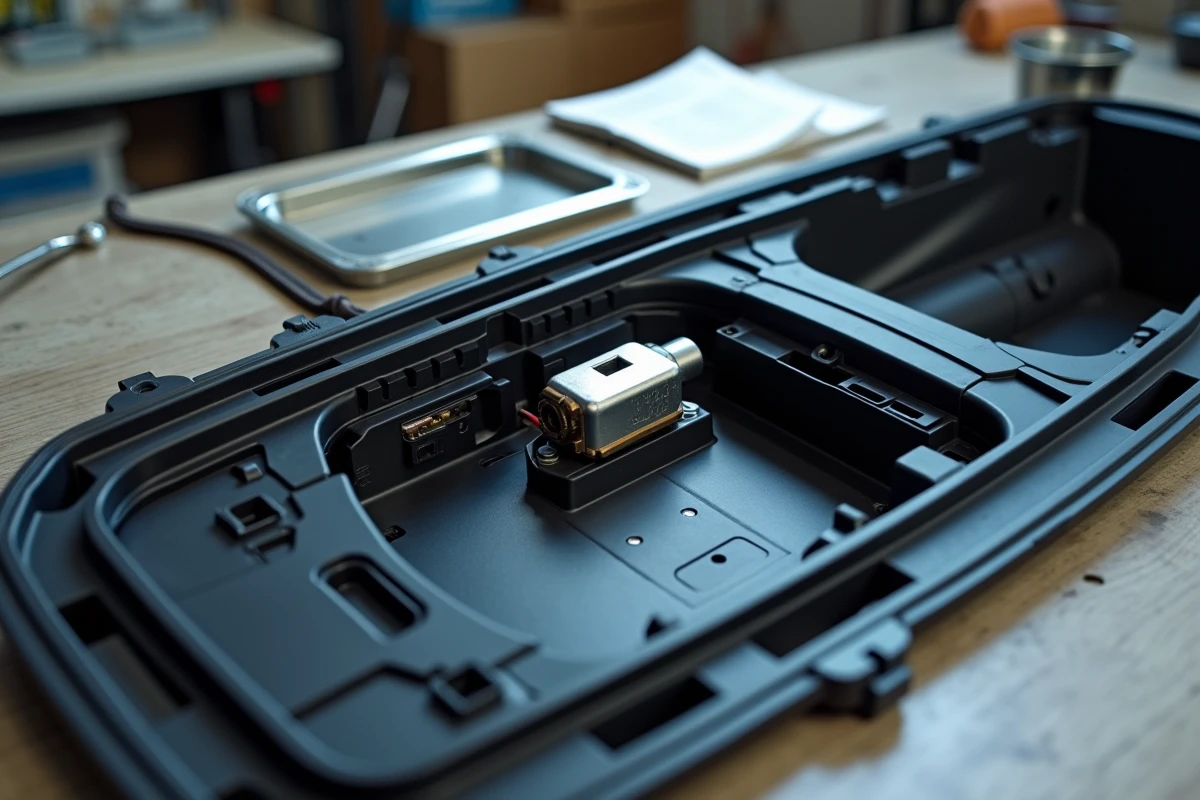
On the Peugeot 308, the central locking system relies on a chain of components that runs from the remote control to the mechanical actuators housed in each door. Identifying which of these links is malfunctioning requires understanding how they interact, and especially where the failures are concentrated according to the vehicle’s generation.
BSI Reprogramming and Central Locking Failures After Workshop Intervention
A rarely discussed angle concerns the malfunctions that appear just after a software update. Independent repair networks have reported an increase in central locking failures occurring immediately after a BSI (intelligent service box) or BSM reprogramming via DiagBox, particularly on 308 II models equipped with ADAS systems.
In these situations, the cause is not a mechanical component but a lost setting. The configuration of the openings, the synchronization of the remote control, or the automatic locking options can be reset without the technician reconfiguring them. The result: a remote control that no longer responds, a trunk that refuses to unlock, or disabled automatic locking.
To diagnose a central locking issue on Peugeot 308 that appeared after a workshop visit, the first question to ask is: has an update been performed recently?
The FEDA (Federation of Automotive Distribution) documented this phenomenon in its 2024 barometer on electronic failures after reprogramming. This confirms that the diagnosis should not be limited to physical parts.
Peugeot 308: Table of Failure Causes According to Observed Symptoms
Before dismantling anything, observing the exact behavior of the system allows for targeting the probable cause. The table below groups the most documented situations from technical forums and workshop feedback.
| Observed Symptom | Probable Cause | Concerned Component |
|---|---|---|
| Inactive remote control, functional interior button | Worn battery or key/receiver desynchronization | Remote control, RF receiver |
| No reaction (neither remote nor button) | Blown fuse or BSI failure | Fuse F12/F19, BSI |
| Only one door does not lock | Defective door actuator | Lock motor (concerned door) |
| Random locking, sometimes functional | Water infiltration in connector or harness | Door harness, hatch connector |
| Failure after workshop visit | Lost setting during BSI reprogramming | BSI, software configuration |
This table highlights one point: the same vehicle can present radically different causes depending on whether the failure affects all doors or just one, and whether the interior button works or not.
Water Infiltration and Door Harness on 308 T9
Among the most insidious causes, water infiltration in the door electrical harnesses or hatch connectors causes random locking. This problem has been recurrent enough on the 308 T9 (phase 1, marketed before 2017) to warrant internal technical notes and, in some countries, limited recall campaigns.
Water causes intermittent micro-short circuits that make diagnosis particularly difficult. The system may function normally in dry weather and fail after a wash or heavy rain. These recall actions are documented in the European Commission’s Safety Gate (Rapex) database.
The trap for the owner: a mechanic testing the vehicle in a covered workshop during dry weather may not reproduce the fault. Requesting a specific check of the door connectors and the harness passage between the body and the door (hinge area) remains the most reliable method.
Connectors to Check First
- The connector located in the driver’s door passage, exposed to water splashes when driving in the rain
- The rear hatch connector, often subjected to condensation and infiltration through the rear window seal
- The cable bundles in the hinge bellows, which undergo repeated bending with each opening and eventually become fragile
Battery and Remote Control: Basic Diagnosis Before Any Dismantling
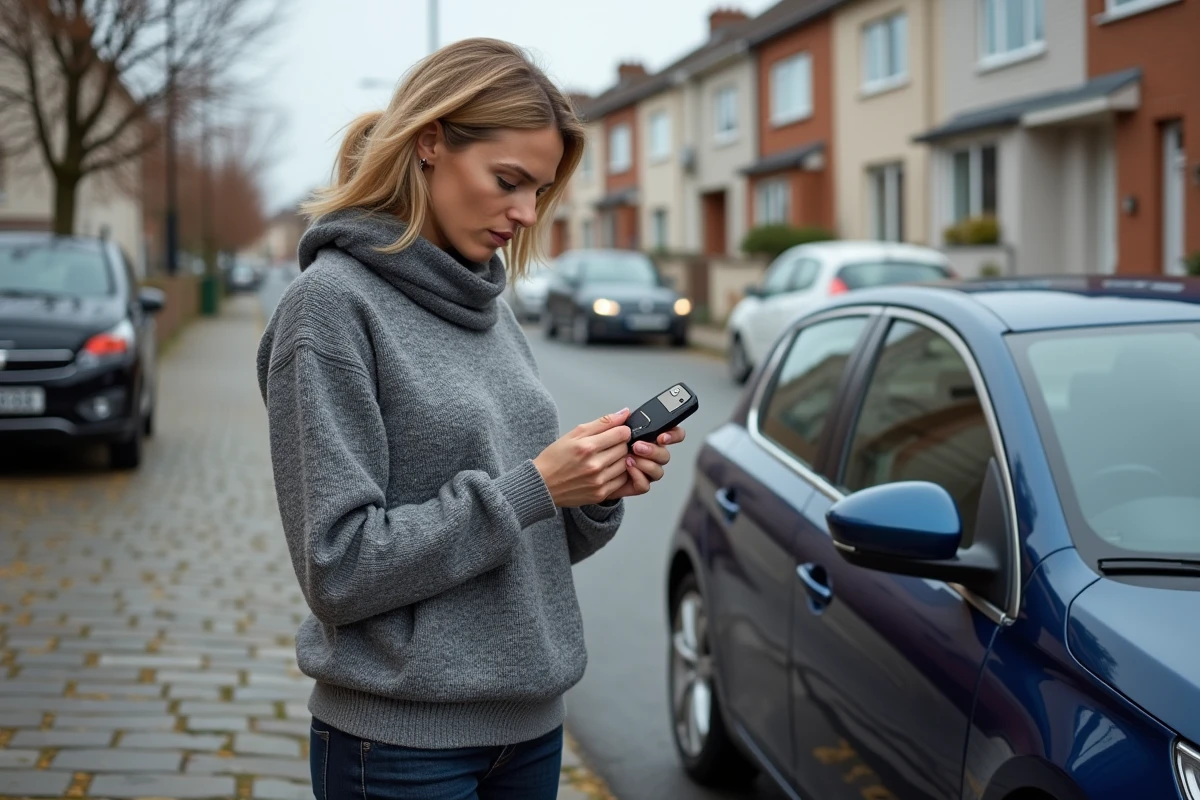
The majority of reports on Peugeot forums concern a simple scenario: the remote control no longer opens the doors. Before considering an expensive replacement, two checks are necessary.
The remote control battery is the first suspect. However, replacing the battery does not always restore communication. On the 308, the resynchronization procedure involves turning on the ignition and pressing the lock button on the key for about fifteen seconds before removing the key. If this action does not change anything, the vehicle’s radio receiver or the BSI should be suspected.
The second often overlooked element is the fuse dedicated to central locking. A visually intact fuse can still be faulty. Testing with a multimeter or swapping two fuses of the same amperage allows for a quick determination.
When the Interior Button Works but Not the Remote Control
This specific case indicates that the power circuit of the actuators is operational. The problem lies upstream, on the side of the radio signal reception. Three possibilities: weak battery, desynchronized key, or faulty RF receiver. If the key works only in contact with the lock cylinder (very short-range signal), the receiver integrated into the vehicle is likely to be the cause.
The chain of failure on the Peugeot 308 follows a readable logic when starting from the symptom to trace back to the component. A methodical diagnosis avoids replacing parts by guesswork, which can quickly become costly on a vehicle whose onboard electronics simultaneously manage central locking, alarm, and starting.