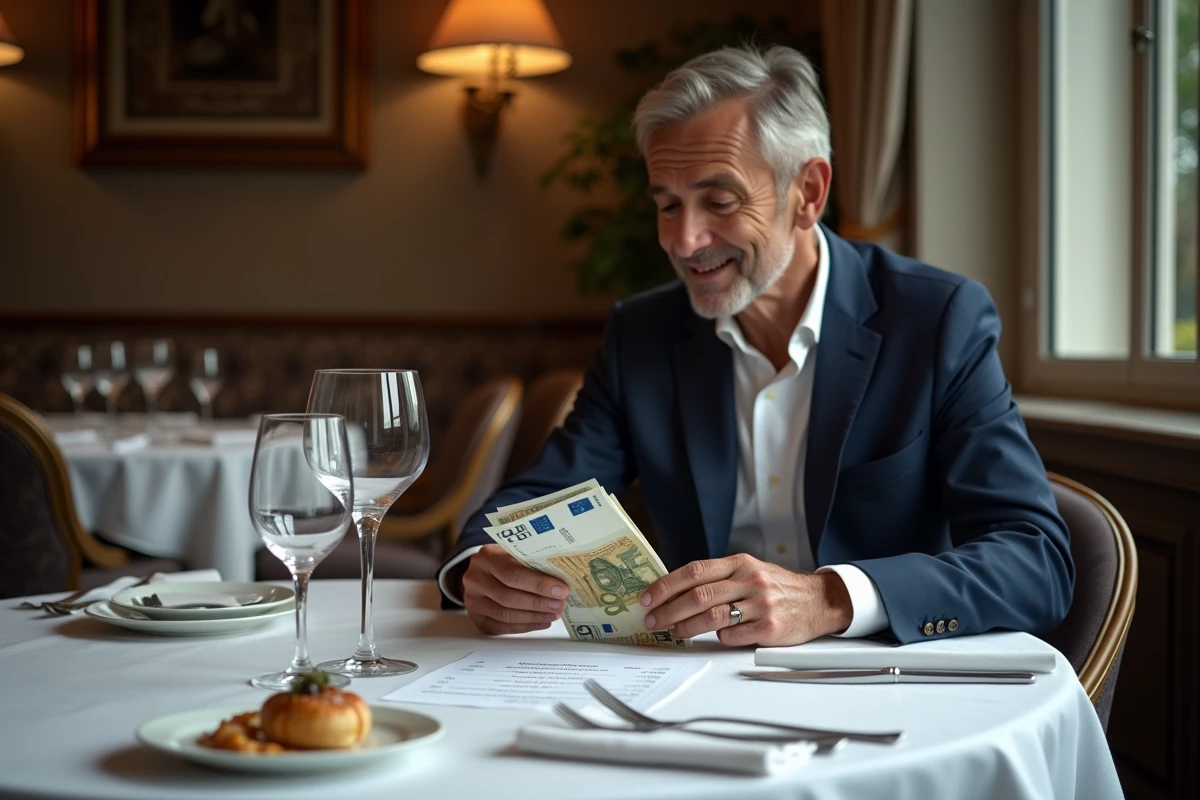
48% of the French say they leave a tip at restaurants, even though service is already included in the final bill. In starred establishments, the tradition has not faded: it transforms, adapts, and endures in its own way, far from automatism and rules set in stone.
Habits are evolving, that is undeniable. Today, some customers simply choose to round up the bill, while others leave between 5 and 10% of the total, discreetly, most often in cash. Contactless or mobile payments do not always make this gesture spontaneous, but the intention remains. On the professional side, implicit expectations persist, but they sometimes escape the attention of passing diners. Above all, the custom of tipping is changing as the restaurant industry adapts to modernity.
Tipping in French fine dining: a living heritage
In the plush dining rooms of starred restaurants, tipping is far from a trivial detail. Here, it is a concrete thank you, a sign of appreciation for the quality of service, well beyond automatism. A velvet hand, a discreet gesture: the gift remains measured, never ostentatious. Far from a fixed rule, the tradition shapes itself differently depending on the establishment: Paris cultivates its codes, just like the provinces, and each address maintains its own customs.
Recognition often takes the form of a bill handed over at the end of the meal, sometimes shared among the team, from the head waiter to the maître d’hôtel. There is no engraved scale: the most common amount ranges from a few euros to 5 to 10%, depending on the experience offered, the reputation of the place, or simply the desire to express gratitude.
For those who wish to delve deeper into customs and avoid missteps, the article tipping at gourmet restaurants provides guidelines and insights, reminding that personalized service or special attention can influence the gesture. Digital payments are gaining ground, yet many still prefer to give their tip in cash: not only for speed but also for solidarity within the team.
What amounts to leave? Concrete guidelines for customers and staff
The moment to settle the bill arrives: in a starred establishment, service is already included, that’s the rule. However, tipping continues to be a gesture of recognition, neither imposed nor mandatory, but genuinely appreciated. With the expansion of card payments, the topic often comes up. Some restaurants ensure an equitable distribution of electronic tips, while others provide information upon request: it’s best to confirm this so that the gesture reaches its intended recipient.
One can rely on a few amounts that have become benchmarks in the profession:
| Bill Amount | Suggested Tip |
|---|---|
| Less than €100 | €5 to €10 |
| €100 to €300 | €10 to €30 |
| More than €300 | 5 to 10% of the total |
There is no universal rule on distribution: each establishment operates in its own way. Some places share with the entire team, combining kitchen and dining room; others reserve the amount for the service. But everywhere, the human dimension is emphasized: tipping is the recognition that circulates.
Practical tips: how to give a tip that is appreciated and well-received
In the demanding world of gastronomy, tipping goes far beyond a simple bill. It is the mark of a successful dinner, of special attention from the service, of a moment shared. Handing over the tip at the end of the meal, preferably to the maître d’hôtel or the head waiter, helps maintain discretion. If payment is made by card, it’s best to signal your intention during payment: not all terminals offer this option, but transparency remains the best approach.
To help you make tipping a relevant and fair gesture, here are some very simple tips:
- Always add a kind word or a smile when handing over the tip: the relationship matters as much as the amount.
- If dining with others, it’s better to pool the tip to give collectively, as this values everyone in the dining room.
- If the service has been exceptional, there’s nothing stopping you from being more generous, but there’s no need to overdo it or feel obligated: remain sincere.
These small attentions nourish the memory of the diner as well as the motivation of the team. The trace of a bill slipped honestly or a simple word of thanks: that’s what transforms a well-crafted reception into a lasting memory. Ultimately, in the back room as well as in the dining area, it is these gestures that give fine dining an extra soul, and remind us that the gastronomic experience never ends with the bill.