Transforming a garden involves choosing from dozens of options for materials, plants, and maintenance systems. The differences in sustainability, long-term cost, and climate resistance between these options are often underestimated. This article compares the concrete parameters that determine the longevity of an outdoor layout and identifies the trade-offs that make the difference between a fleeting dream space and a resilient garden over several years.
Decking Materials and Flooring: Durability Comparison
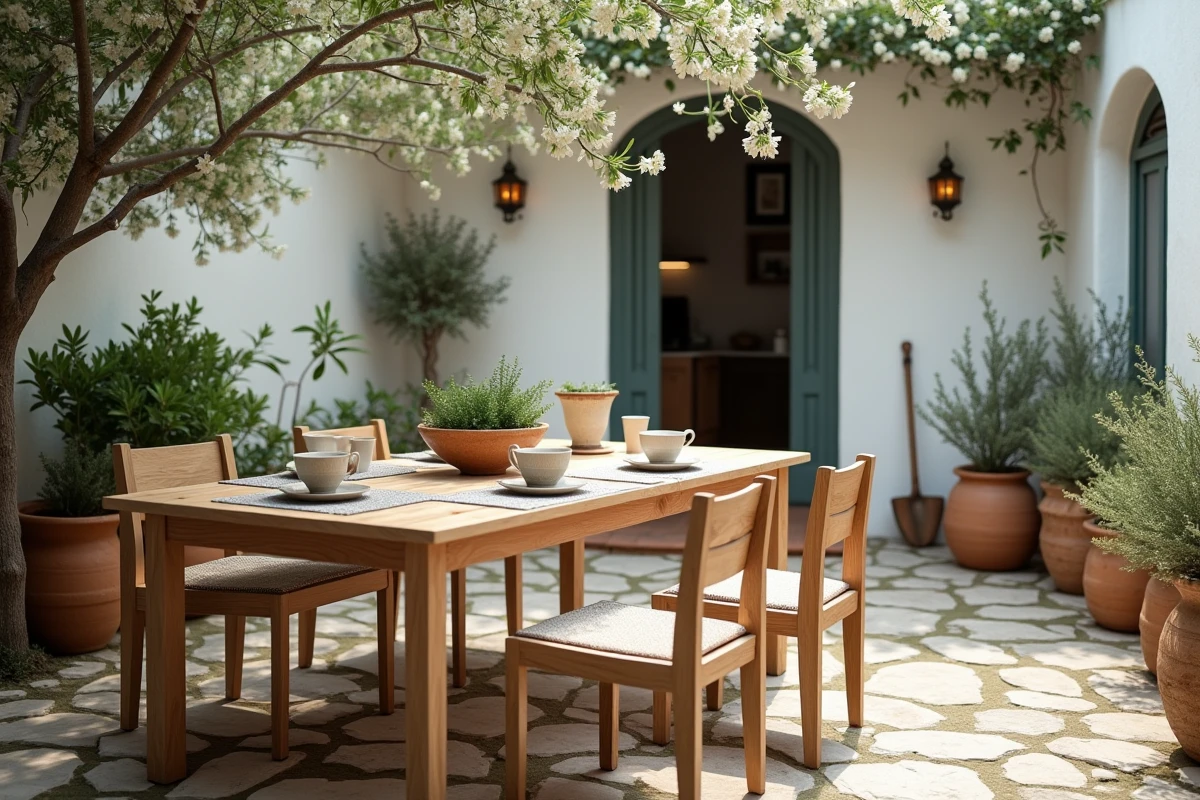
The choice of flooring affects maintenance, weather resistance, and the aging of the entire layout. Three main families dominate the market for terraces and circulation areas.
| Material | UV and Frost Resistance | Annual Maintenance | Estimated Lifespan |
|---|---|---|---|
| Exotic Wood (ipe, cumaru) | Excellent | Oil or saturator once a year | Several decades |
| Composite Wood | Good (varies by range) | Simple jet cleaning | Long, less than high-end exotic wood |
| Porcelain Paving Slabs | Very good (frost resistant) | Almost none | Very long |
Wood remains the most requested material for its natural appearance, but porcelain paving requires almost no maintenance and withstands freeze-thaw cycles without damage. In contrast, mid-range composite wood can warp under high heat, a parameter that is becoming increasingly critical with repeated heatwave episodes.
For pathways and functional areas, mineral mulch (gravel, crushed slate) offers a draining alternative that limits runoff. It complements a hard surface on the main terrace well.
Before starting landscaping work, it is useful to discover the estimator leprodestravaux on Inside Out to refine the overall budget and compare expense items.
Drought-Resistant Plants and Climate Garden Design
The rise in summer temperatures and the scarcity of water have changed planting recommendations in recent years. Recent design guides emphasize reducing traditional lawn areas, which consume a lot of watering, in favor of drought-resistant ground covers (thyme, yarrow, fine fescue).
Three principles structure a so-called “resilient” garden:
- Diversify the plant layers (trees, shrubs, perennials, ground covers) to create internal microclimates that protect the most fragile plants from direct sunlight.
- Apply a thick mulch (organic or mineral) on all planted areas, which reduces evaporation and limits the growth of weeds without resorting to chemical herbicides.
- Integrate a rainwater harvesting system, even a simple one (tank connected to a gutter), to cover a significant part of summer watering needs.
The Labbé Law, strengthened since 2019, prohibits the retail sale of most pesticides to individuals. This regulatory constraint encourages the design of spaces where pest regulation relies on biodiversity: mixed hedges favorable to beneficials (tits, ladybugs, hedgehogs), companion plants in the vegetable garden, crop rotation.
Mediterranean Shrubs in Continental Climate
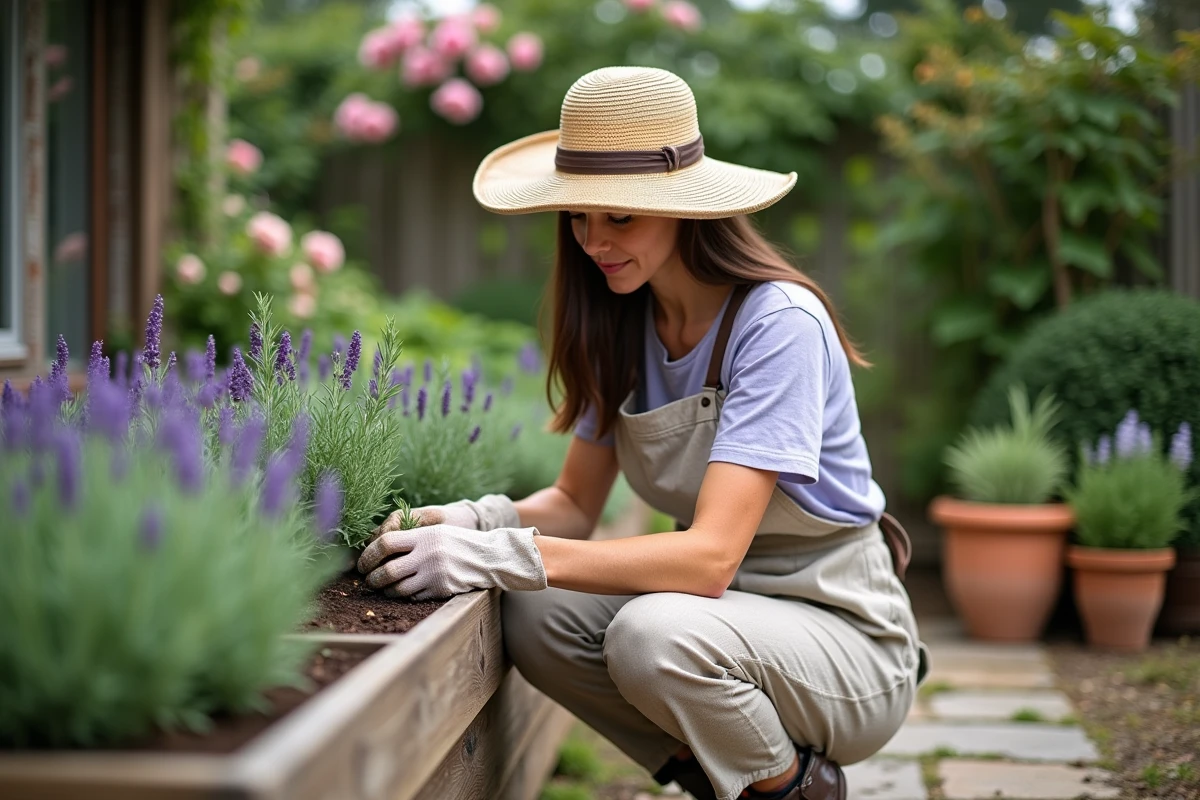
Species such as cistus, rosemary, or lavender, traditionally associated with the south, are now adapting well further north if the soil is draining. The limiting factor is not the winter cold itself, but the stagnant moisture at the base. A gravel bed under the root ball at planting often resolves the issue.
Connected Watering and Water Management in the Garden
Since 2022, irrigation systems controlled by moisture sensors and weather data have become more widespread. These devices measure soil moisture levels in real-time and activate watering only when the programmed threshold is reached.
Sensor-controlled watering significantly reduces water consumption compared to a traditional timer that waters at fixed times, even after rain. Associated applications automatically suggest tasks (watering, pruning, treatment) based on the plant calendar and local weather.
For a medium-sized garden, the basic setup includes one or two moisture sensors, a valve connected to the outdoor tap, and a mobile app. Installation does not require plumbing skills.
Watering Zoning According to Plant Needs
Not all areas of the garden require the same watering frequency. Dividing into three zones simplifies management:
- Dry Zone (Mediterranean plants, ornamental grasses): very spaced watering, or none after the first year of installation.
- Moderate Zone (perennial beds, hedges): weekly watering during dry periods only.
- Wet Zone (vegetable garden, residual lawn): regular watering, ideally drip irrigation to limit losses.
This zoning allows for concentrating water resources where they produce visible results and avoiding waste on plants that do not need it.
Structuring Elements to Create Functional Areas
A garden transformed into a living space relies on a clear division between relaxation, circulation, and cultivation areas. Structuring elements (pergola, screen, low wall) play a role in visual separation without enclosing the space.
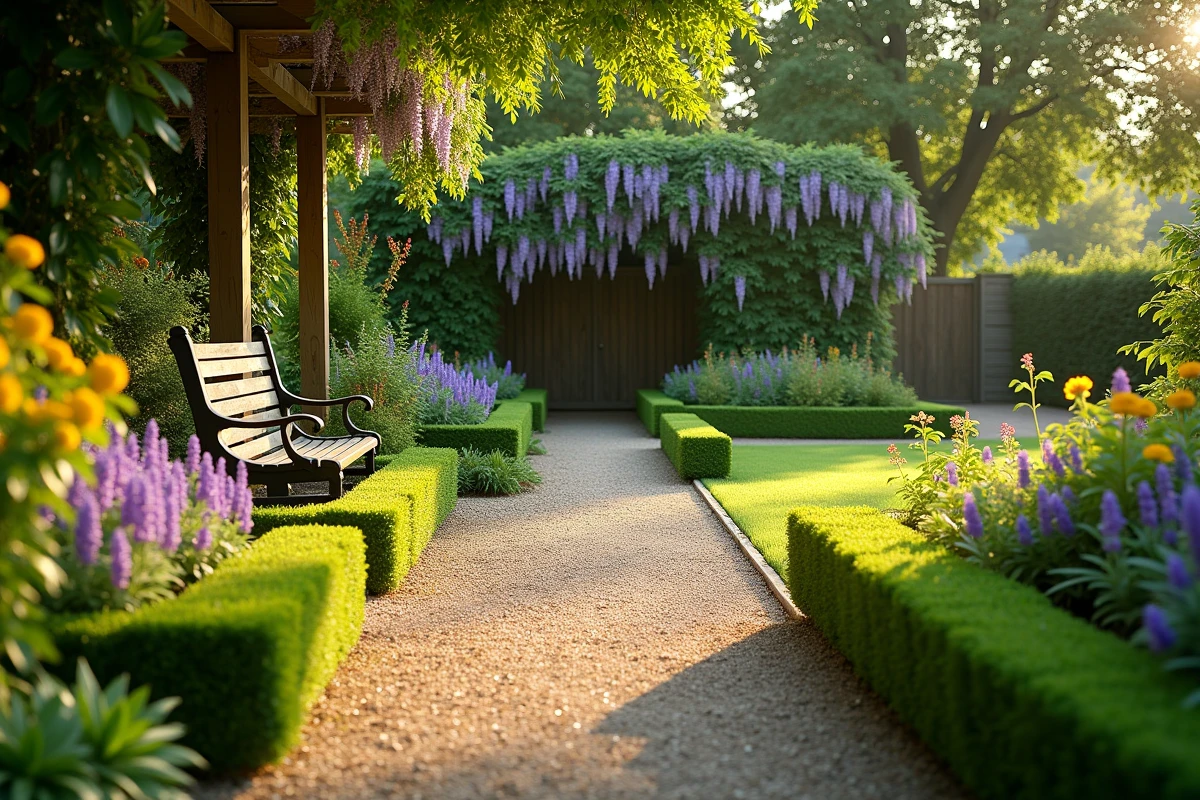
Wood remains the dominant material for pergolas, but powder-coated steel is gaining ground for its finesse and longevity. It allows for thinner sections than wood, visually lightening the structure. However, it conducts heat: plan for a plant cover (wisteria, star jasmine) or a micro-perforated fabric for shading.
Low-voltage outdoor lighting (solar or wired LEDs at 12V) extends garden use into the evening and highlights plant volumes. The latest generation solar bollards now offer sufficient autonomy to light a path or bed all night, provided they are positioned in a well-sunlit area during the day.
The design of a sustainable garden relies less on the initial budget than on the coherence between the choice of materials, the selection of plants, and the water management system. A covering suitable for the local climate, plants chosen for their water autonomy, and sensor-controlled watering form a whole whose maintenance decreases each year as the plants establish themselves.