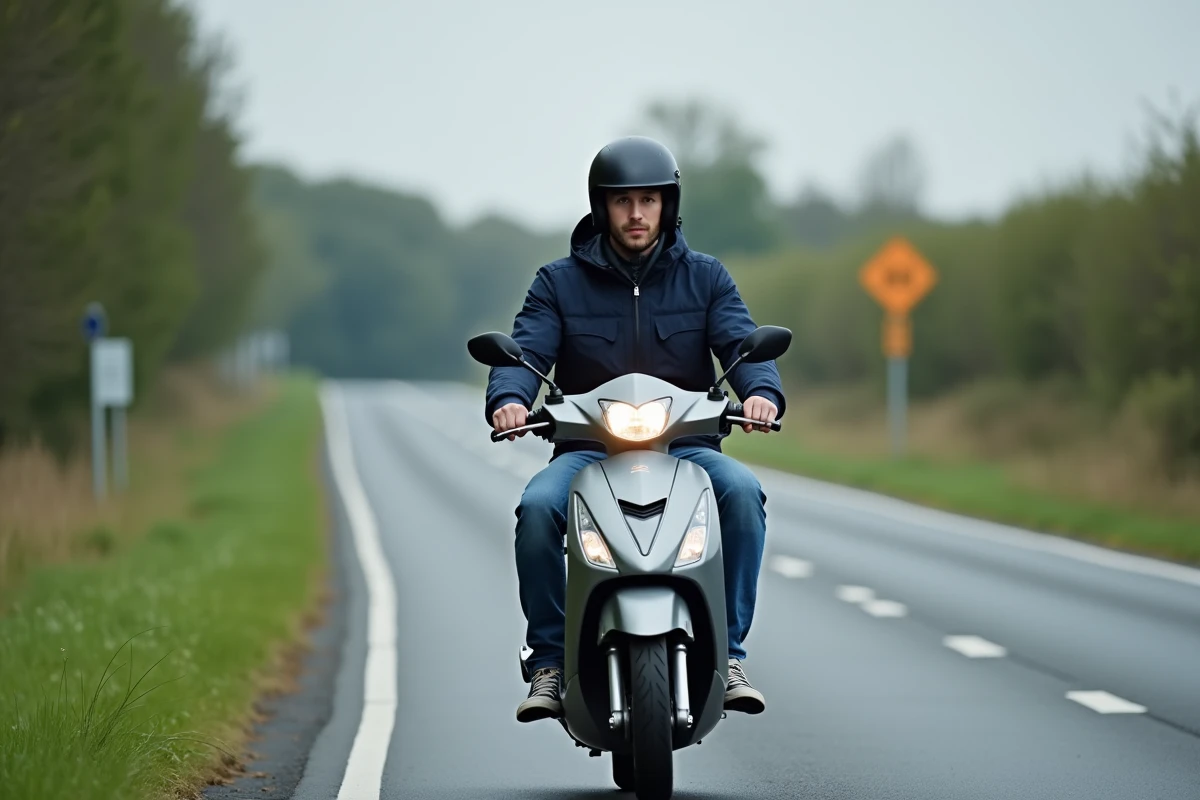
A no-entry sign leaves no room for doubt: the 50 cc scooter has no place on most national roads. However, the reality is more nuanced. Between the power of the two-wheeler, signage, and type of license, the general rule sometimes gives way to local exceptions. But beware: an explicit sign always takes precedence over everything else. Deviating exposes one to sanctions that can come without warning, much heavier than one might imagine. And this applies even for a simple occasional trip or a short detour.
Scooter on national roads: what French legislation provides
National roads are not just simple secondary routes: they form the backbone of the French road network. The legislation is strict here. For 50 cc scooters, limited to 45 km/h, access is generally prohibited, except on certain sections where no other road allows passage. Everything thus depends on both the type of vehicle and the local context. It is impossible to answer the question “ can you ride a scooter on a national road” with a blanket statement: each situation requires precise verification, as detailed in the article “Scooter: Can it circulate on a departmental road? – Auto Maniacs.”
Respecting the highway code is imperative to circulate on these routes. A simple check can quickly turn into a hefty fine or even the immobilization of the scooter. Electric models follow the same logic: power, restrictions, approval, everything must be in order.
It is impossible to skip training. Since 1988, the road safety certificate (BSR) has been essential for new drivers. It guarantees a minimum mastery of the rules and specific dangers associated with national roads. As for access to the highway, it remains strictly closed to all scooters, regardless of category.
To summarize the constraints to know, here’s what applies to scooters on national roads:
- Maximum speed allowed: 45 km/h for a 50 cc scooter.
- National roads: access prohibited for mopeds, except for indicated local exemptions.
- Control: increased presence of law enforcement on this type of route.
Road safety leaves nothing to chance: approved helmet, certified gloves, functioning lighting. The slightest flaw can be costly, especially on national roads where surveillance is constant and tolerance very low.
What equipment and behaviors to adopt for safe circulation?
On a national road, the slightest negligence does not forgive. The driver’s equipment is not optional: the approved helmet must be fastened, certified gloves worn on every trip, even for a few kilometers. A durable jacket, closed shoes… everything that can limit injuries is highly recommended. These obligations also apply to electric scooters, without any exceptions.
Visibility plays a crucial role, especially on these fast routes. Favor reflective clothing, anticipate the movements of others. On national roads, traffic intensifies, speeds increase, every action must be thought out, never improvised. Keeping distance, adapting speed, staying attentive to mirrors, and monitoring blind spots: this is the daily life of a cautious driver. Overtaking should never be done lightly.
Here are the basic rules to apply systematically to ensure safety:
- Wearing a helmet: always mandatory, checked during inspections.
- Gloves and appropriate equipment: essential against abrasion and impacts.
- Respecting safety distances: a guarantee of anticipation and reactivity.
- Regular checks of the scooter’s condition: tires, brakes, and lighting must be impeccable.
On a national road, every trip resembles an exercise in collective attention. The safety of all depends on each person’s rigor, and discipline naturally imposes itself at every departure.
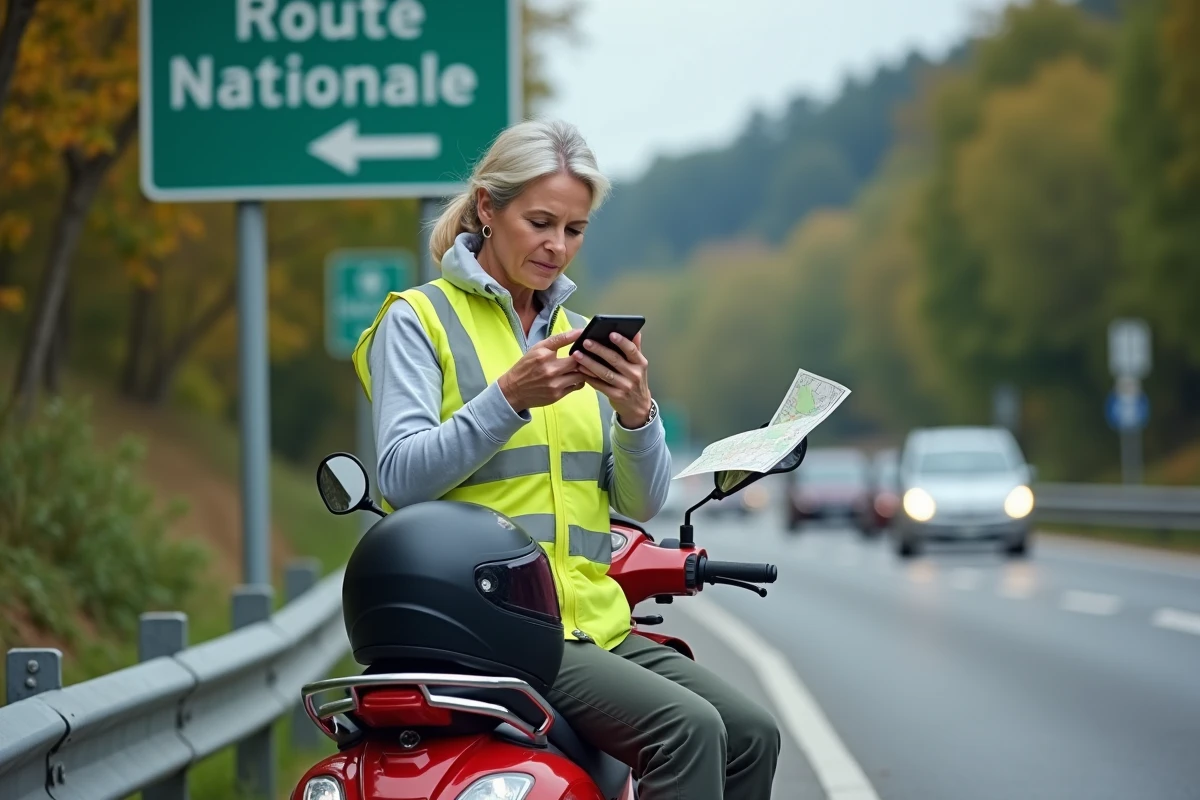
Responsibility and vigilance: the keys to sharing the road peacefully
Riding a scooter on a national road means accepting a high level of responsibility. The highway code is not just a series of rules: it lays the foundations for smooth coexistence. Lights, signs, priorities, limits, every detail matters and structures collective life on the asphalt. The slightest misstep can be costly: fines, point deductions, immobilization of the two-wheeler, and sometimes even impoundment.
Vigilance never stops at simply applying the rules. On national roads, anticipating becomes a vital reflex: keeping distance, adjusting trajectory, considering the weather… all gestures that save lives. Maintaining the scooter is also a priority. Regular checks of tires, brakes, lighting, or oil levels are essential, even if the law does not require it systematically. This follow-up ensures a reliable vehicle and enhanced safety on every trip.
Sharing the road does not mean resigning oneself: it means understanding that on these routes, the slightest recklessness can jeopardize everything. Between motorists, heavy trucks, cyclists, and scooters, vigilance must be constant. Seeing and being seen is not just a guideline; it is the condition for returning home without unpleasant surprises, from dawn until nightfall.