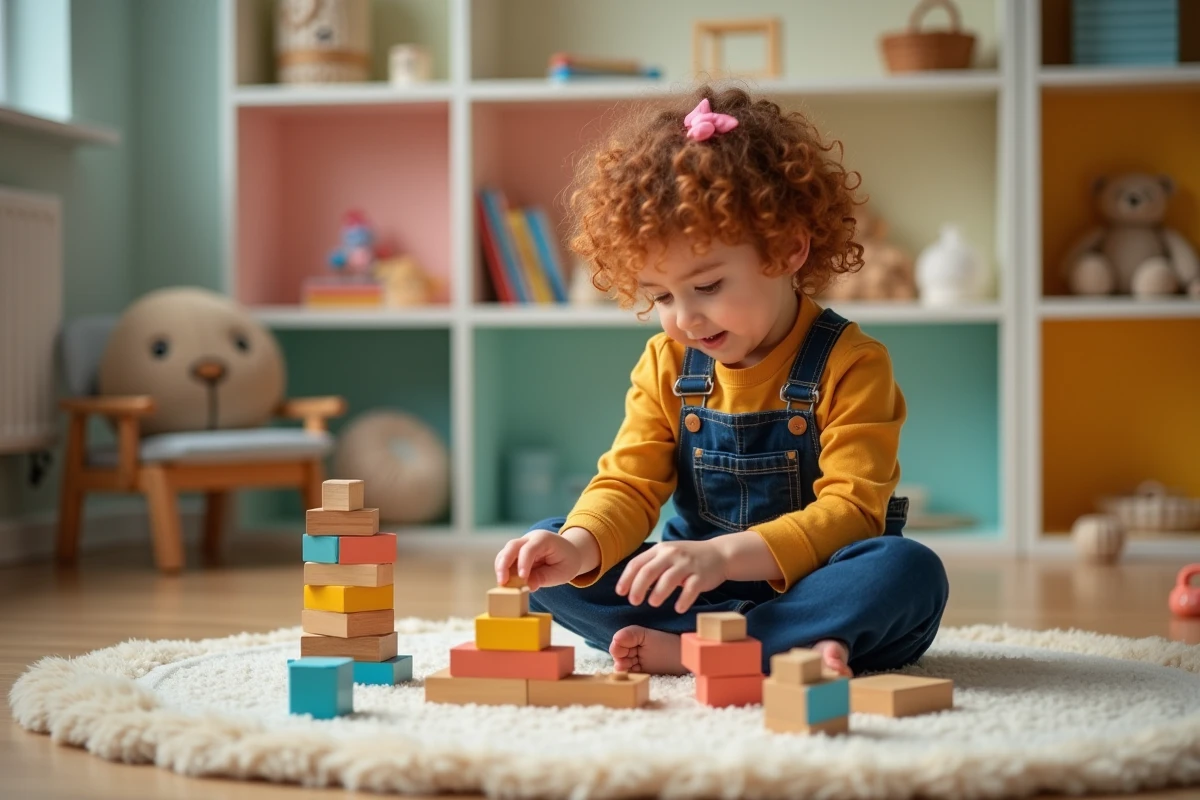
A toy is an object designed or repurposed to trigger voluntary, repeated, and free activity in a child. This operational definition distinguishes the toy from a simple educational tool: the essence of play lies in pleasure, and it is this pleasure that makes learning sustainable. Understanding how this mechanism works allows for better selection of games and toys suitable for each age group.
Materials and safety of children’s toys: what the European regulation changes
The choice of a toy begins with its composition. Certified wood, recycled plastic, organic fabric: the materials determine both the durability of the object and its safety when in contact with a baby’s skin or mouth.
In 2023, the European Commission proposed a new regulation on toy safety (Toy Safety Regulation) that strengthens requirements on chemical substances and introduces specific constraints for digital and connected toys. This text goes beyond the historic directive by targeting endocrine disruptors and imposing a digital product passport to facilitate traceability.
For parents, the practical consequence is direct: a wooden or recycled plastic toy bearing the CE marking meets basic standards, but the new framework pushes manufacturers to document the entire product lifecycle. Specialized brands like lespetitspoissontrouges.fr are already selecting their references based on these composition and durability criteria.
Repairability also enters the equation. A wooden puzzle with a replaceable missing piece or a construction game whose elements can be sold separately extends the toy’s lifespan and reduces waste volume.
Educational games and free play toys: two complementary logics
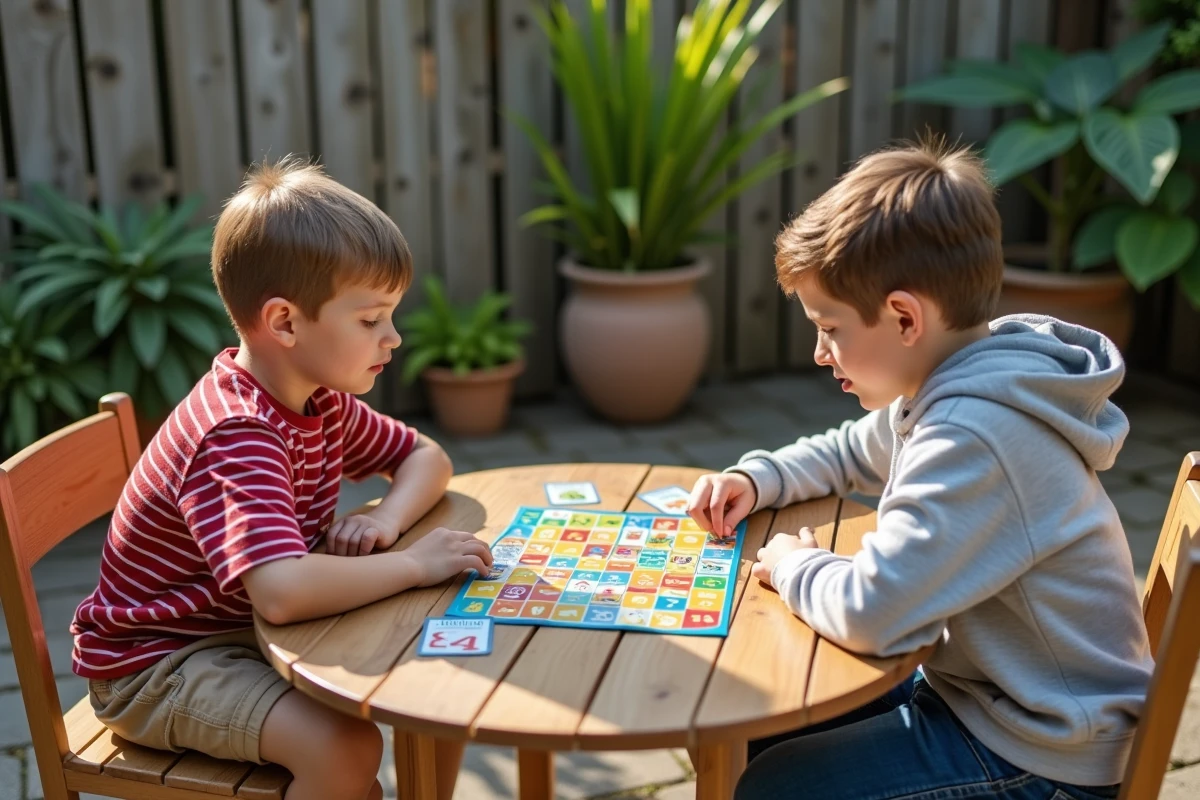
The distinction between an educational game and a free play toy is not a matter of quality, but of design intent. An educational game (shape sorting puzzle, letter cards, manipulative book) offers a defined objective: reproduce a model, match shapes, count pieces. The free play toy (blocks, modeling clay, animal figurines) allows the child to set their own rules.
Both formats develop different skills and complement each other. Structured play enhances concentration, sequential logic, and the ability to follow instructions. Free play stimulates imagination, decision-making, and frustration management when the block tower collapses.
Criteria for balancing the two approaches
- Before age 2, prioritize sensory toys for free manipulation (wooden rattles, textured fabrics, stacking rings) that engage fine motor skills without requiring a specific outcome.
- Between ages 2 and 5, introduce puzzles with a few pieces, picture card games, and pattern reproduction activities, while maintaining a daily time for unstructured play.
- After age 5, cooperative board games, construction kits, and activity books allow for shared rules, negotiation, and playful reading.
The trap would be to fill the play space solely with educational toys. A child who only has access to guided activities misses the opportunity to develop narrative autonomy, the ability to invent a story from three figurines and a cardboard box.
Wooden toys, puzzles, and card games: choosing according to age and use
Three categories of toys consistently appear in parents’ searches: wooden toys, puzzles, and card games. Their popularity stems from a common point: they operate without batteries, screens, or planned obsolescence.
Wooden toys for babies and young children
Wood provides a sensory feedback that plastic does not replicate: weight, grain, temperature to the touch. For a baby in the oral phase, an untreated wooden teething ring serves as both a discovery object and a soothing tool. Stacking or sorting wooden games then promote hand-eye coordination.
Puzzles: from the first fitting to complex models
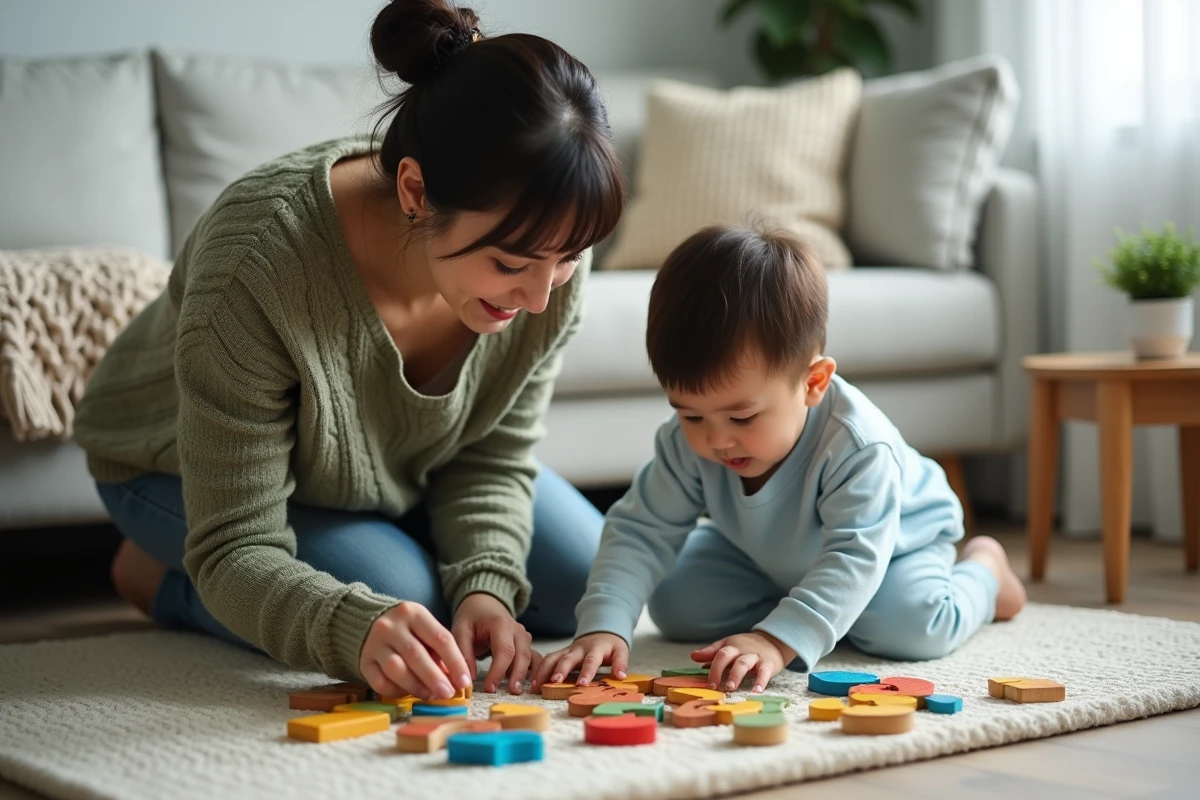
A 4-piece button puzzle for an 18-month-old and a 100-piece puzzle depicting animals for a 6-year-old do not engage the same cognitive functions. The former works on shape recognition and grasping. The latter mobilizes visual memory, patience, and the ability to reproduce a model by breaking down the steps.
Family card games
Card games suitable for children (memory, matching games, simplified battles) introduce a social dimension absent from solitary play. The child learns to wait their turn, accept losing, and observe the strategies of other players. These family fun activities also enhance vocabulary when the cards depict animals, objects, or everyday scenes.
Connected toys and screen time: drawing the line
Interactive toys (learning tablets, programmable robots, connected plush toys) are increasingly occupying shelf space. Their educational value depends less on the embedded technology than on two concrete factors: the type of interaction offered and the degree of adult supervision.
A robot that the child programs with logical blocks to replicate a path requires problem-solving skills. A tablet that repeats sounds when the child presses a button merely stimulates a reflex. The difference lies in the cognitive engagement required.
The new European regulation on toy safety also targets specific risks associated with connected objects: collection of personal data, security of wireless connections, content accessible via the toy. These aspects go beyond the usual framework of educational choice and pertain to the protection of children’s data.
- Ensure that the connected toy also works offline, so as not to depend on a remote server or expose the child to unfiltered content.
- Limit passive interaction toys (pressing, listening, watching) in favor of those that require creative action (building, programming, drawing).
- Accompany the first uses to transform the object into a dialogue support rather than a substitute for presence.
The last point of vigilance concerns software durability. A connected toy whose app is no longer updated after two years becomes a silent object, whereas a wooden puzzle remains functional for decades. The complete lifecycle of the toy, not just its purchase price, deserves to be factored into the decision-making process.