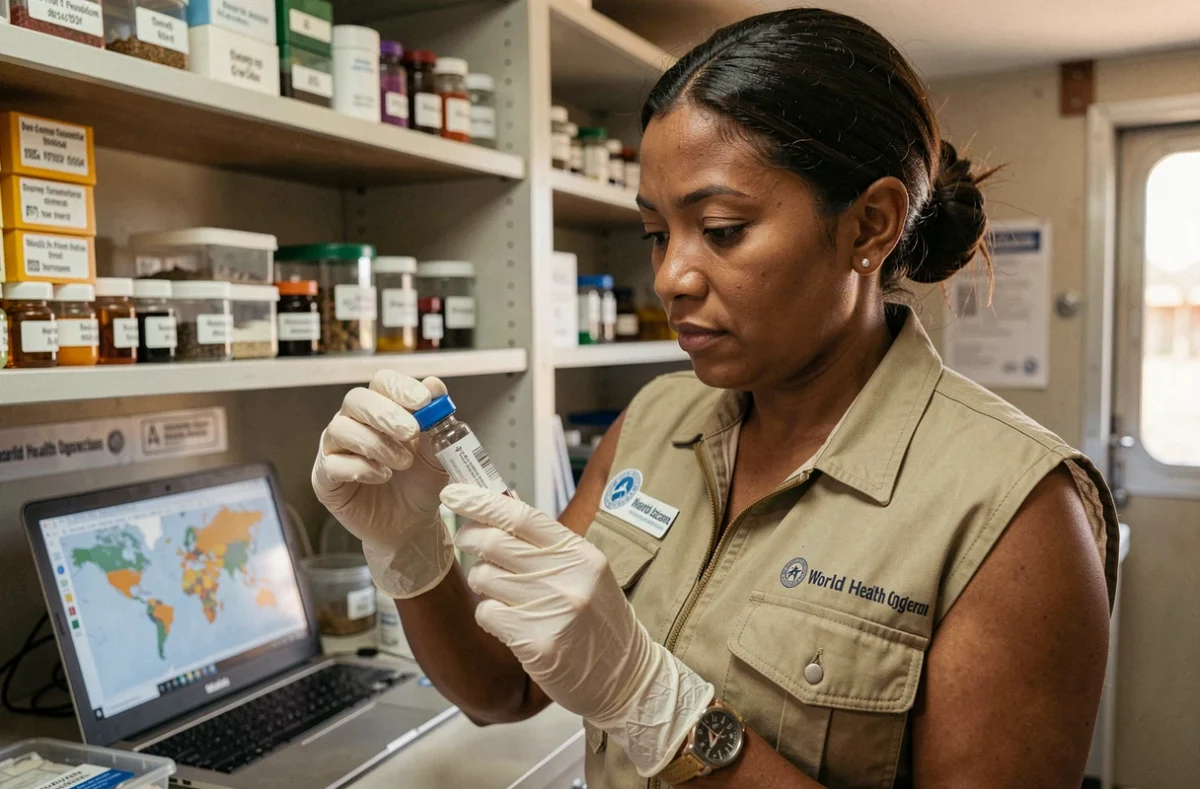
As of 2026, smallpox remains the only human disease officially eradicated. The World Health Assembly declared it eradicated on May 8, 1980. Since then, no other disease has joined the list. The gap between the resources deployed and the outcome—just one eradication in more than four decades—reveals the structural difficulty of the task.
Vaccine-derived polioviruses: the trap after regional elimination
The WHO African Region has been certified free of indigenous wild poliovirus since 2020. This status does not protect against vaccine-derived polioviruses, which persist and cause outbreaks in several countries across the continent.
The mechanism is well understood: the live attenuated oral vaccine, which is highly effective at stopping transmission, sheds a modified virus. In populations where vaccination coverage falls below a critical threshold, this virus mutates and regains its neurovirulence. The problem is therefore not the vaccine itself, but the coverage gap that allows the virus to circulate.
In its message of October 23, 2026, WHO Africa reported that vaccination campaigns were being refocused on the highest-risk areas due to a lack of funding, leaving some communities inadequately protected. The detection of cases in Madagascar showed how easily hard-won progress can be undermined by localized gaps in vaccination coverage.
As for wild poliovirus type 1, it continues to circulate in Afghanistan and Pakistan, the last two endemic countries. Wild poliovirus types 2 and 3 have been certified as eradicated, but this partial victory is not enough to declare a disease eradicated worldwide while even a single serotype is still circulating.
Funding and surveillance after elimination: what prevents a disease from returning
Declaring a territory free of a disease does not mark the end of the effort. It marks the start of a maintenance phase that carries a high political cost, because its results are invisible: funding the absence of cases.
Three pillars must remain in place at the same time:
- Sustained funding for vaccination campaigns, including in areas where no cases have been reported for years. Any budget cut creates pockets of unvaccinated people that can serve as potential reservoirs.
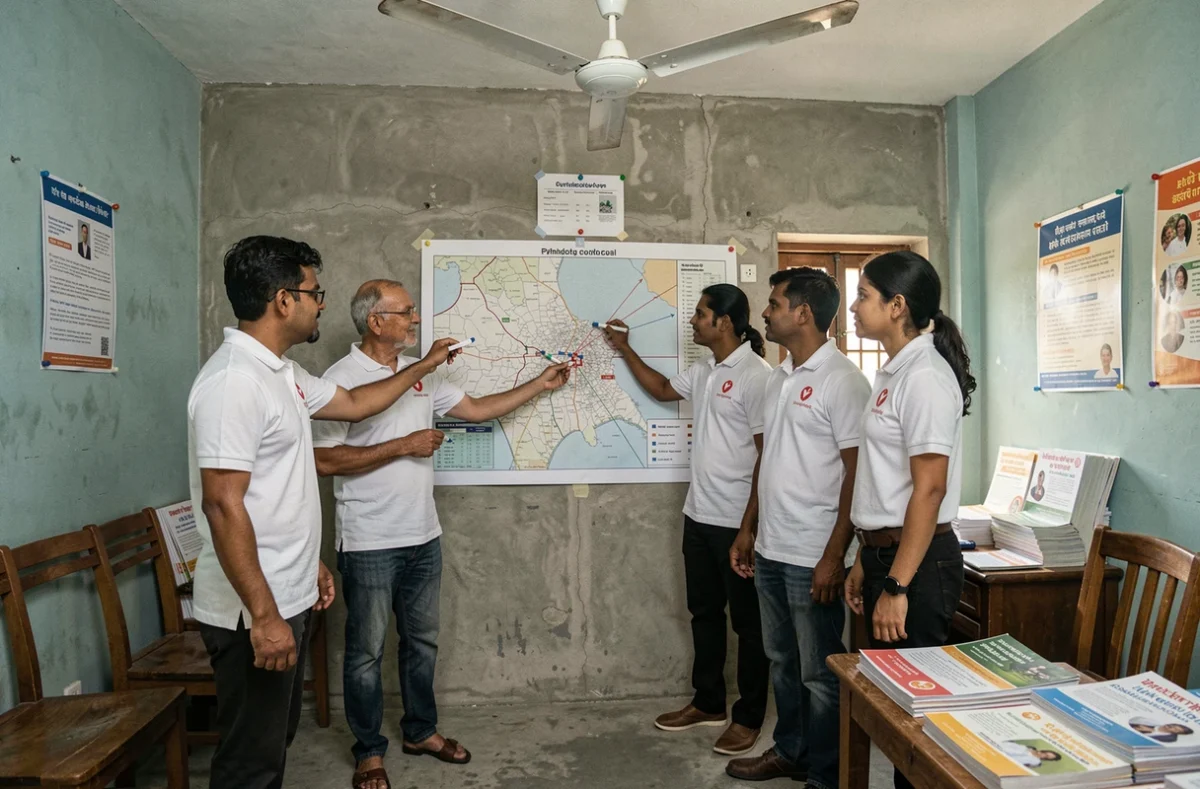
- Active epidemiological surveillance, supported by a network of laboratories capable of detecting an imported case within days. Without early detection, a reintroduced virus can circulate undetected for months.
- Cross-border coordination, because pathogens do not respect administrative boundaries. Elimination in one country loses its value if a neighboring country experiences an uncontrolled outbreak.
Measles illustrates this risk. The United States was declared free of endemic measles in 2000, but imported cases regularly trigger outbreaks in under-vaccinated communities. Elimination is never a permanent achievement until global eradication is reached.
Neglected tropical diseases: real progress, uncertain 2030 target
WHO has set elimination or control targets for around 20 neglected tropical diseases by 2030. The interim picture is mixed: only three indicators had met their 2025 milestones.
Guinea worm disease (dracunculiasis) is the most advanced case. WHO recorded just 10 human cases in 2025, a historic low. There is no vaccine for the disease, and its decline depends entirely on water filtration, community surveillance and case containment. This result shows that a non-vaccine strategy can work, even though reducing the final cases to zero remains the most difficult stage of the program.
For other diseases, the trajectory is less clear. Mass treatment programs for lymphatic filariasis and trachoma are making progress, but disruptions caused by recent health crises have slowed coverage in several countries in sub-Saharan Africa and Southeast Asia.
What Guinea worm disease teaches us about the last mile
Going from a few dozen cases to zero is disproportionately costly. Every remaining case is found in a remote area, often affected by conflict or food insecurity. Surveillance must cover thousands of villages to detect a single potential case.
This cost-per-case ratio is the main argument donors cite for cutting budgets, even though this is the stage when any loss of momentum has the most serious consequences. Stopping at 10 cases risks a resurgence to several hundred within a few years.

Eradication or elimination: why the distinction changes public health strategies
Eradication means zero cases everywhere, permanently, making control measures unnecessary. Elimination means zero transmission in a given geographical area, while vigilance must be maintained.
This distinction is not merely semantic. It determines how resources are allocated. An eradication program requires global consensus, centralized funding and coordination among all endemic countries. An elimination program can advance country by country, but this creates disparities: some regions reach zero cases while others still account for the vast majority of the global burden.
Not every disease can be eradicated. For eradication to be biologically feasible, the pathogen must have no significant animal reservoir, a tool for interrupting transmission must exist (a vaccine, treatment or environmental measure), and cases must be detectable before they become contagious.
Smallpox met all three conditions. Polio nearly does, but the circulation of vaccine-derived strains adds a layer of complexity that was absent from the original scenario. For diseases such as malaria or Ebola, eradication remains out of reach with current tools because of animal reservoirs, multiple vectors and frequent mutations.
The global picture therefore comes down to an operational paradox: we have unprecedented vaccines, treatments and surveillance systems, yet every disease close to eradication runs into the same obstacles—unstable funding, conflict zones and uneven vaccination coverage. If the next eradication comes, it will not be a technological triumph. It will be a logistical and political one.