A cordless trimmer that struggles with tall grass is a failed purchase. The problem is that the power displayed on the packaging only tells part of the story. Voltage, motor type, and the nature of the vegetation to be cut: several parameters combine to determine whether your device will be up to the task.
Type of vegetation: the real starting point for choosing power
Before looking at a technical sheet, take a look at your garden. The power you need directly depends on what the cutting line will encounter.
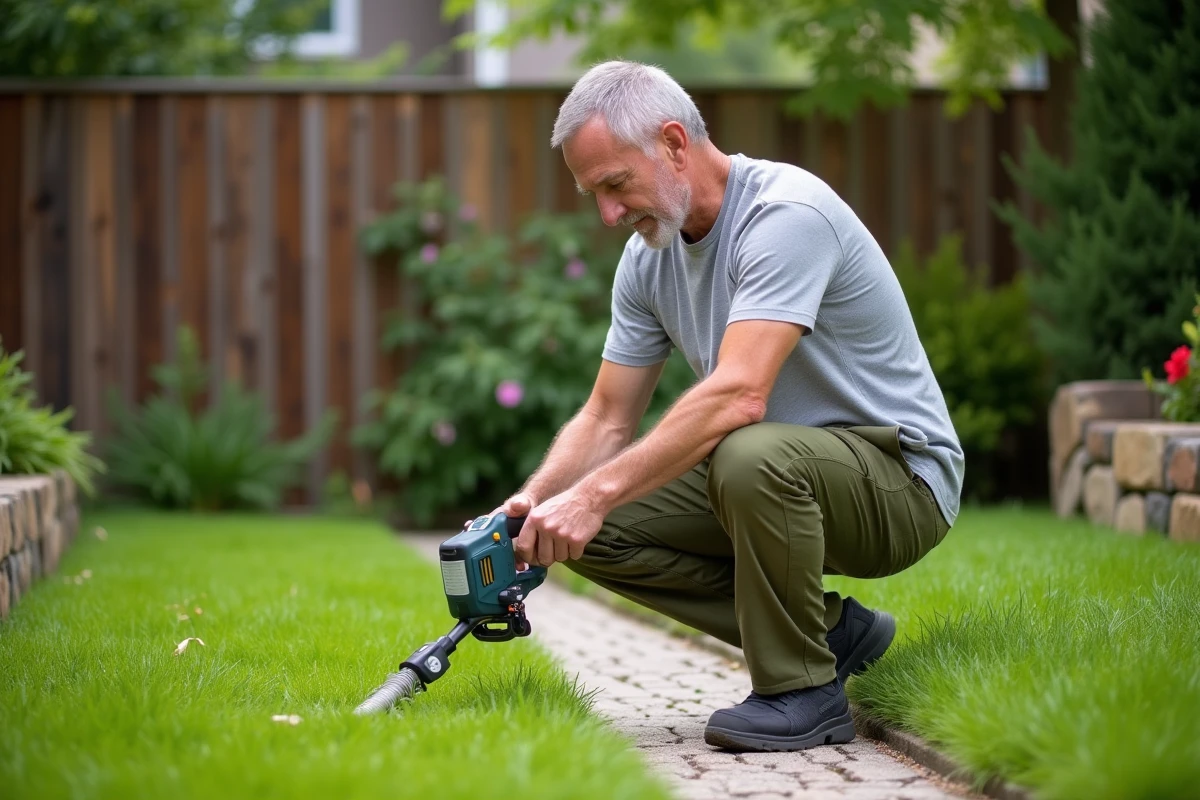
A lawn maintained weekly, with clean edges along a path, requires very little energy. An 18 V model is more than sufficient for this type of light use.
The situation changes when you let it grow for a few weeks, or when dense grasses settle at the foot of a wall. There, an 18 V device will struggle, slow down, and drain its battery far too quickly. A 36 V trimmer (or two combined 18 V batteries) handles those thick grasses without faltering.
For gardens where tall grasses, tough nettles, or even small brambles grow at the edges, you need to step it up a notch. Some brushless motor models in 36 V deliver enough torque to avoid stalling with each pass.
Choosing the ideal power for a cordless trimmer thus involves identifying the toughest type of vegetation you will be cutting regularly, not occasionally.

Voltage and brushless motor: understanding what the technical sheet really says
Have you ever noticed that two trimmers displaying the same voltage do not cut the same at all? That’s normal. Voltage indicates the battery’s voltage, not the actual power delivered to the line.
What voltage tells you (and what it hides)
Voltage gives a range indication. 18 V corresponds to regular maintenance use, on fine grass and modest surfaces. 36 V (or 2×18 V) is aimed at longer sessions and tougher grasses.
However, two 36 V devices can have very different performances. The hidden variable is the motor.
Why the brushless motor changes the game
A brushless motor (without carbon brushes) converts more battery energy into line rotation. Less internal friction, less heat lost. The concrete result: a 36 V brushless cuts longer and stronger than a carbon motor of the same voltage.
The Makita DUR368APT2, for example, combines two 18 V LXT batteries in a brushless configuration. The Bosch AdvancedGrassCut 36V-33 uses a single 36 V block. Both approaches work, but brushless technology remains the common point of models that deliver on their power promises.
If you remember only one technical criterion, let it be this one. At equal voltage, a brushless motor consistently outperforms a carbon motor in autonomy and cutting torque.
Autonomy and weight: the concrete limits of battery power
Increasing power on a cordless trimmer has a physical cost. The higher the voltage, the heavier the battery. And a heavy device tires the arms, especially during sessions longer than twenty minutes.
This is a trade-off that product sheets never highlight. A very powerful but heavy model becomes cumbersome at the edge of a flower bed, where it needs to be tilted and maneuvered often. For a medium-sized garden, the balance between power, weight, and autonomy matters more than raw power.
- An 18 V trimmer with a lightweight battery is suitable for regularly maintained gardens, with short sessions and high maneuverability comfort.
- A 36 V brushless model offers the best compromise for medium to large gardens, where fine grass and tougher vegetation alternate.
- Dual battery configurations (2×18 V) provide the power of a 36 V with the possibility of using only one battery for light tasks, reducing weight.
Shared battery platform: an often underestimated selection criterion
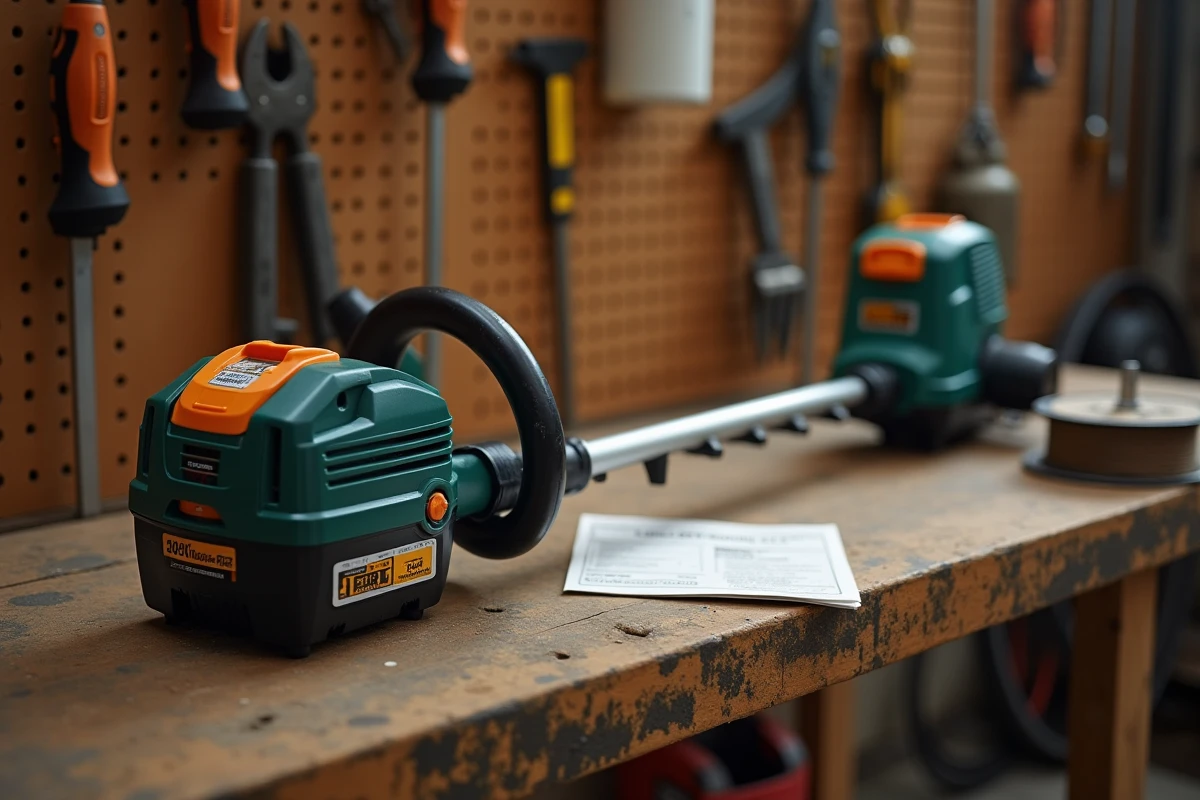
Do you already own a cordless drill or blower? Check the brand and battery range. Major manufacturers (Bosch, Makita, Einhell, Ryobi) offer interchangeable battery platforms between their garden and DIY tools.
Specifically, if you have two Makita LXT 18 V batteries in your workshop, buying the Makita DUR368APT2 trimmer in “bare” version (without battery) is cheaper. You benefit from 36 V power with equipment you already own.
This is not a detail. The price of a cordless trimmer often includes the battery and charger, which represent a significant part of the budget. Choosing within a battery ecosystem you already own reduces costs and increases autonomy thanks to spare batteries.
The Power X-Change platform from Einhell, for example, covers a wide range of tools at accessible prices. The Bosch Home and Garden 36 V range is aimed at gardeners who want to stay within a single ecosystem without investing in professional equipment.
Wireless trimmer: summary of power criteria by use
- Maintained lawn edges, fine grass: 18 V with standard motor, lightweight battery. Comfort takes precedence over power.
- Medium garden, varied grasses, regular sessions: 36 V brushless (or 2×18 V). This segment offers the best power/versatility ratio for most gardens.
- Large areas, dense grasses, light brambles at the edges: 36 V brushless with high-capacity battery. Prefer a model with a harness or adjustable handle to compensate for weight.
The right cordless trimmer is not the most powerful one on the shelf. It is the one whose power matches the actual vegetation of your land, with a weight you can carry without fatigue throughout your working session.